 Image 1 of 1
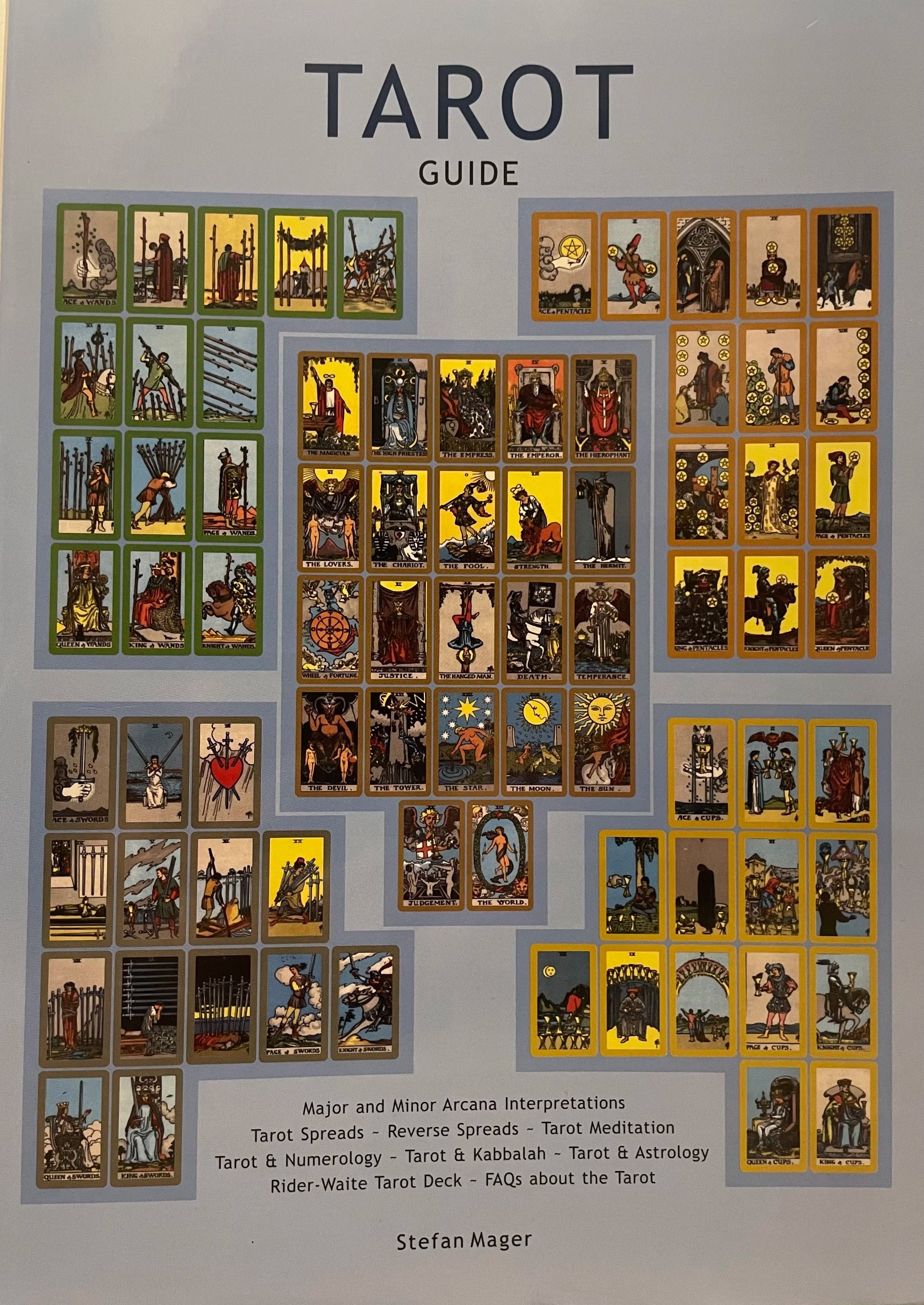
Introduction Tarot is a symbolic language that helps you explore questions, patterns, and possibilities. This guide gives you practical steps for conducting readings, choosing spreads, interpreting cards, and developing intuition. Keep it quirky and curious — approach the cards with respect, not rules.
Interpreting the Cards
Start with the imagery: Let initial impressions guide you — colors, figures, symbols, posture, and background matter.
Combine with traditional meanings: Learn upright and reversed meanings, but treat them as guides, not rules.
Consider position context: Each card’s meaning shifts depending on its placement in the spread.
Notice repeating themes: Repeated suits, numbers, or major arcana signals amplify a message.
Use elemental logic:
Wands = fire (action, passion, creativity)
Cups = water (emotions, relationships, intuition)
Swords = air (thoughts, conflict, clarity)
Pentacles = earth (material, work, body)
Major vs. Minor Arcana: Major Arcana points to big life themes; Minor Arcana addresses day-to-day energies.
Reversals: Can indicate blockage, internalized energy, delay, or the opposite meaning. Decide whether you read reversals based on your style.
Developing Intuition and Skill
Study the deck: Work through each card’s imagery and story. Keep a journal of readings and card meanings.
Practice regularly: Daily draws, practice readings for friends, or journaling deepens fluency.
Reflect on outcomes: Revisit past readings to see how interpretations played out and refine your approach.
Use meditative exercises: Visualize card scenes, or meditate with a card for a day to deepen connection.
Mix learning sources: Combine classic meanings, personal intuition, books, and courses to build a unique voice.
Introduction Tarot is a symbolic language that helps you explore questions, patterns, and possibilities. This guide gives you practical steps for conducting readings, choosing spreads, interpreting cards, and developing intuition. Keep it quirky and curious — approach the cards with respect, not rules.
Interpreting the Cards
Start with the imagery: Let initial impressions guide you — colors, figures, symbols, posture, and background matter.
Combine with traditional meanings: Learn upright and reversed meanings, but treat them as guides, not rules.
Consider position context: Each card’s meaning shifts depending on its placement in the spread.
Notice repeating themes: Repeated suits, numbers, or major arcana signals amplify a message.
Use elemental logic:
Wands = fire (action, passion, creativity)
Cups = water (emotions, relationships, intuition)
Swords = air (thoughts, conflict, clarity)
Pentacles = earth (material, work, body)
Major vs. Minor Arcana: Major Arcana points to big life themes; Minor Arcana addresses day-to-day energies.
Reversals: Can indicate blockage, internalized energy, delay, or the opposite meaning. Decide whether you read reversals based on your style.
Developing Intuition and Skill
Study the deck: Work through each card’s imagery and story. Keep a journal of readings and card meanings.
Practice regularly: Daily draws, practice readings for friends, or journaling deepens fluency.
Reflect on outcomes: Revisit past readings to see how interpretations played out and refine your approach.
Use meditative exercises: Visualize card scenes, or meditate with a card for a day to deepen connection.
Mix learning sources: Combine classic meanings, personal intuition, books, and courses to build a unique voice.